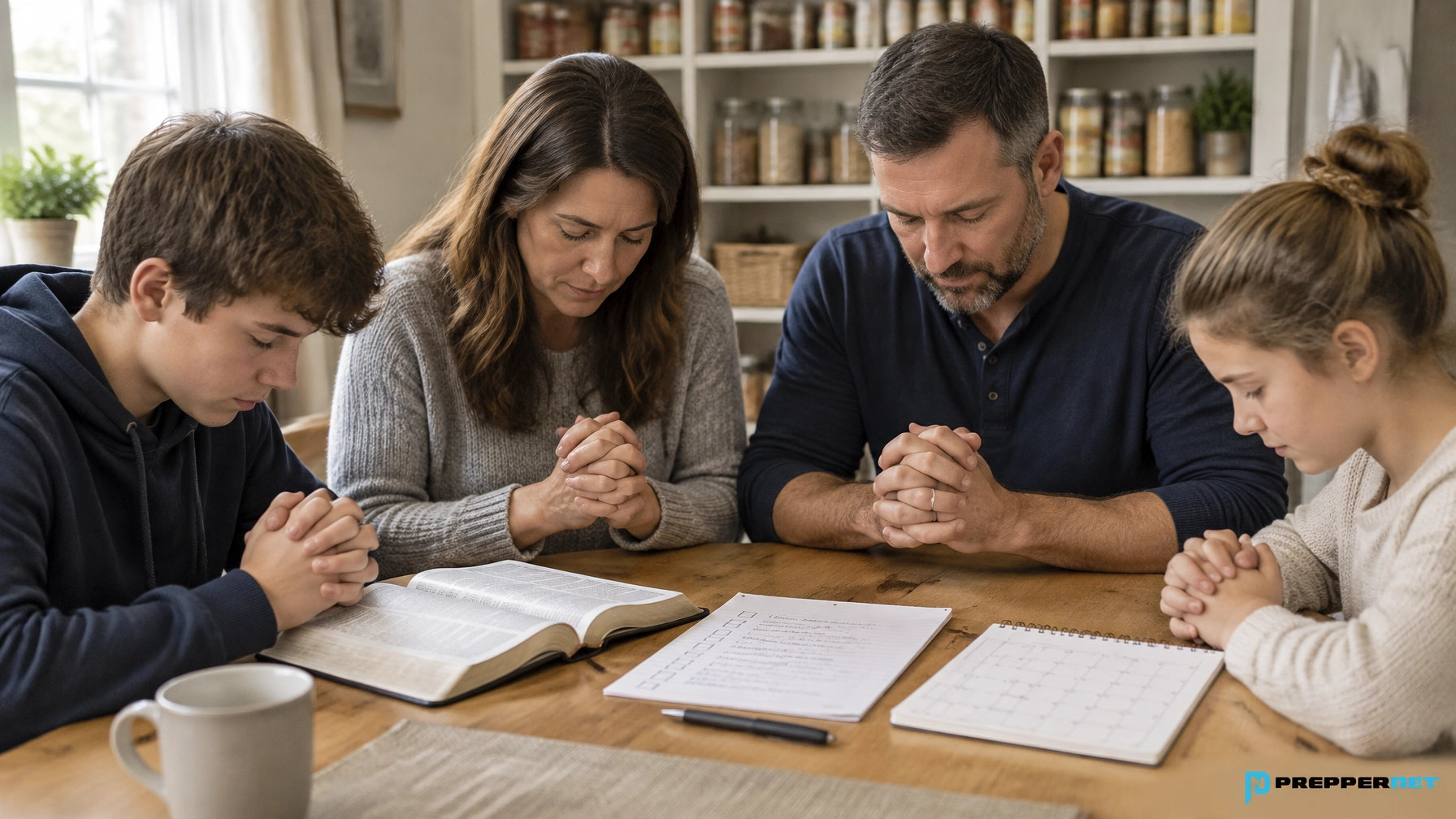
Noah Didn't Wait for Rain: Faith, Obedience, and the First Act of Preparedness
Noah’s story shows how faith can lead to practical action. Explore what Genesis 6, Hebrews 11, James 2, and Proverbs 22 teach about Christian preparedness, family care, and preparing together as a church.
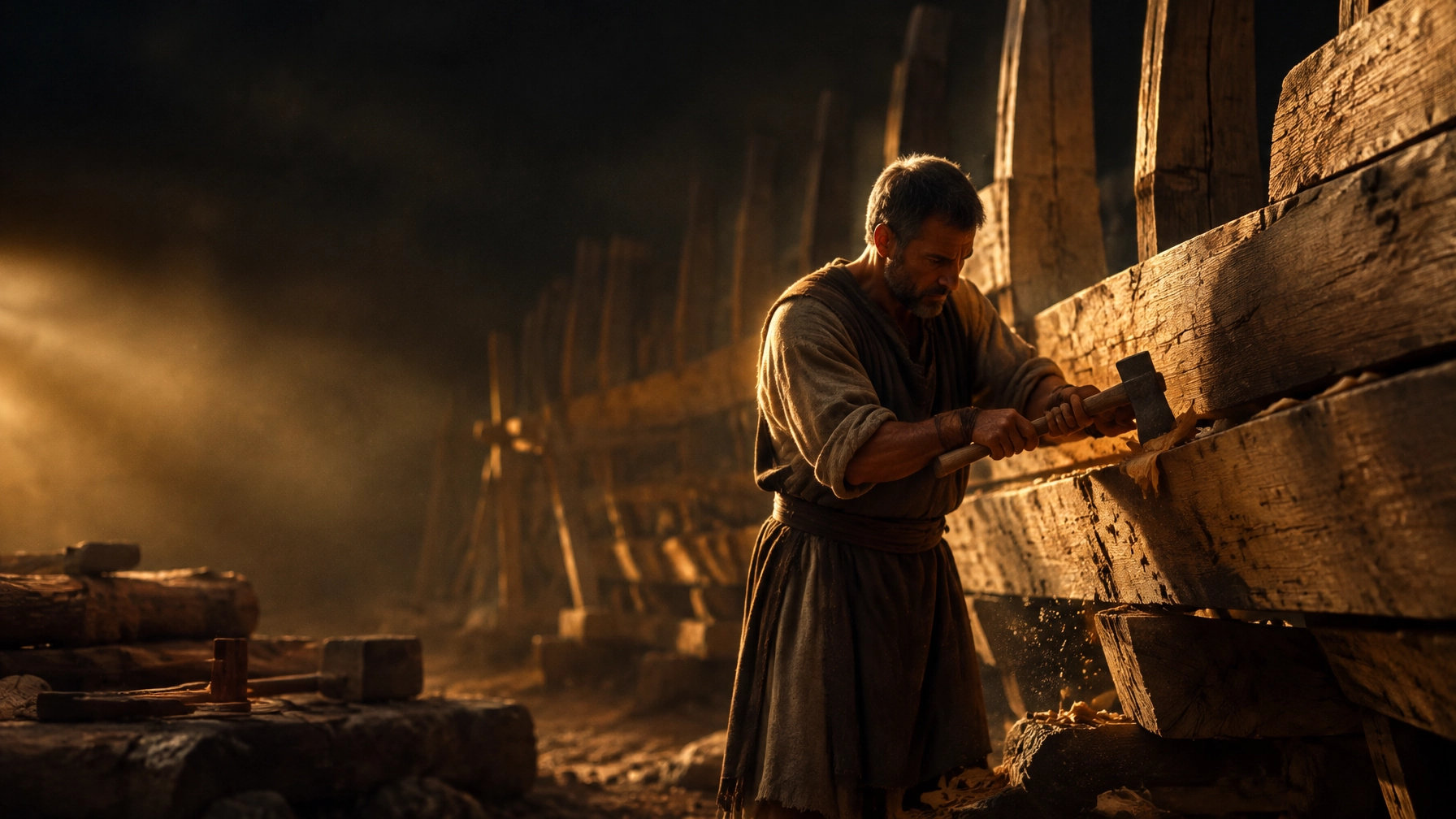
Noah did not wait until the rain began to take God’s warning seriously.
The account in Genesis does not use the modern term prepper, and it does not literally say Noah had never seen rain. But it does give us a powerful picture of faith expressed through practical preparation. God warned Noah about what was coming, gave him detailed instructions, and Noah began to build before the promised flood was visible.
The lesson is simple: faith trusted God’s warning; obedience swung the hammer.
For families and faith communities today, Noah’s story offers a grounded way to think about Christian preparedness, not as fear or an attempt to control the future, but as a faithful response to what we know we can do.
God’s warning came with a plan
In Genesis 6:13–22, God tells Noah that a flood is coming and instructs him to build an ark. The directions are specific: use wood, make compartments, cover the structure inside and out, build it to stated dimensions, include multiple decks, bring his family aboard, and store food for the people and animals.
The dimensions alone make clear that this was not a symbolic gesture. The ark was to be 300 cubits long, 50 cubits wide, and 30 cubits high. Noah had work to do, materials to gather, and provisions to plan.
Then the passage closes with a plain statement: “Noah did this; he did all that God commanded him” (Genesis 6:22, ESV).
The text does not tell us exactly how long construction took. The often-repeated claim that Noah spent 120 years building the ark is not stated as a fact in Genesis. What Scripture does say is enough: Noah was warned about what he could not yet see, and he acted on that warning.
Faith became visible in Noah’s actions
The New Testament looks back on Noah’s response and names it as faith. Hebrews 11:7 says, “By faith Noah, being warned by God concerning events as yet unseen, in reverent fear constructed an ark for the saving of his household.”
Notice the movement in the verse:
- Noah was warned.
- He trusted God.
- He built.
- His household was protected.
His faith was not just agreement with a message. It shaped what he did next.
That does not mean preparation earns God’s favor or replaces dependence on him. The passage says Noah acted by faith. His work was the expression of trust, not a substitute for it.
The principle appears in James 2:14–17, where James challenges a faith that exists only in words. He points to a person in need of food and clothing: wishing them well without helping does not meet the need. Faith that is alive moves toward practical care.
For Christians, that connection matters. Following Jesus is not merely saying we care about our families, neighbors, or church. Love takes shape in ordinary decisions, learned skills, and thoughtful action.
Preparation can be a form of stewardship
Preparedness is sometimes described as the opposite of trust: if God provides, why make plans? Noah’s story complicates that assumption. God’s provision for Noah included a warning, a design, and the opportunity to act.
Preparation does not make us self-sufficient. It recognizes that we have responsibilities within our limits. We can pray for our households and also learn where the water shutoff is. We can trust God and keep a reasonable supply of needed items. We can ask for wisdom and make a family communication plan.
Proverbs 22:3 offers a concise principle: “The prudent sees danger and hides himself, but the simple go on and suffer for it.” It is a general statement of wisdom, not a command to predict every crisis. Read alongside Noah’s example, it reminds us that responding sensibly to a known risk is not the same as living in fear.
A calm plan can make room for steadier decisions. It can help a family care for children, older relatives, or neighbors when normal routines are interrupted. It can help a church serve people rather than scramble to figure out basic needs in the middle of a disruption.

Start with the responsibilities in front of you
No household can prepare for everything. That is not the goal. A useful beginning is to consider the needs and risks that are most relevant to your family and community, then take manageable steps.
For example:
- Talk as a household. Decide how you will contact one another if plans change or phone service is disrupted.
- Gather essentials gradually. Keep practical supplies on hand, including water, food, medications, and basic first-aid items appropriate to your household.
- Learn useful skills. Know how to use a fire extinguisher, provide basic first aid, and follow local emergency guidance.
- Consider who may need help. Check in with neighbors, relatives, or church members who may need assistance.
- Review and practice. A plan is more useful when everyone understands it and knows where to find it.
These actions do not guarantee an easy outcome. They do give people a better starting point, and a clearer way to care for one another.
Protecting your family is not a rejection of God’s provision. It can be one way of taking responsibility for the people entrusted to you. The distinction is posture: preparation rooted in fear can consume our attention; preparation rooted in faith can make us more thoughtful, generous, and ready to serve.
Make preparedness part of church life
Noah’s story is about a household, but preparedness does not need to stay private. Churches already gather people, build relationships, and care for neighbors. Those connections can become a source of practical strength.
A small group could set aside one meeting to discuss:
- How members will share urgent information.
- Who may need help with transportation, medication, or mobility.
- What supplies and skills are already available in the group.
- How the church can support its surrounding community.
Keep the conversation measured and specific. The goal is not to frighten people or predict disaster. It is to build a habit of care before a need arises.
Forrest Garvin’s Prepared Together explores how communities can plan and act together. The Prepare The Church platform also offers faith-centered resources for congregations and small groups looking to take practical next steps.

Faith hears. Obedience acts.
Noah’s example is not an invitation to panic. It is an invitation to trust God enough to act when action is called for.
He followed the instructions he was given. He built before the outcome was visible. He prepared to protect his household. Hebrews remembers that work as faith.
That pattern remains useful for Christians today. Faith can pray and plan. Faith can trust God and learn. Faith can care for a family, prepare to serve a neighbor, and invite a church group to act together.
You do not need to build an ark to begin. Start with one conversation, one practical skill, or one thoughtful improvement to your household plan. Then take the next step when you are ready.
To explore the biblical case in more depth, see Forrest Garvin’s The Case for Christian Preparedness. It offers a faith-centered look at the relationship between trusting God and doing our part.
SEO Details
- Title: Noah Didn't Wait for Rain: Faith, Obedience, and the First Act of Preparedness
- Slug:
noah-faith-obedience-preparedness - Excerpt: Noah’s story shows how faith can lead to practical action. Explore what Genesis 6, Hebrews 11, James 2, and Proverbs 22 teach about Christian preparedness, family care, and preparing together as a church.
- SEO title: Faith and Preparedness: What Noah Teaches Us
- Meta description: Discover how Noah’s faith led him to prepare before the flood. A grounded look at Scripture, family preparedness, and helping your church prepare together.
- Featured image alt text: An ancient craftsman builds a wooden structure in warm, low light, representing Noah’s faith and obedience before the flood.
- Tags: Faith and Preparedness, Christian Preparedness, Noah, Faith, Jesus, Family Preparedness, Church Preparedness, Genesis 6, Hebrews 11:7, Prepared Together