The Bug Out Bag List: What You Actually Need to Survive
Most people wait until the sirens scream to start packing. Learn the PrepperNet approach to the 72-hour bug out bag: quality over quantity, and skills over gear.
Most people wait until the sirens scream to start packing.
Most people think a fancy bag is a substitute for a plan.
Most people are wrong.
In a crisis, your gear is the only thing standing between your family and catastrophe. But here is the reality: a bag full of "cool" gadgets you don't know how to use is just heavy luggage. You don't need a survival museum on your back. You need a system that works when you are tired, hungry, and stressed.
We focus on the 72-hour rule. Why? Because the first three days are the most volatile. If you can bridge the gap from the moment of impact to reaching a secondary location or a stable PrepperNet group, you have won the first battle of survival.
This is the no-nonsense bug out bag list for the everyday American family.
1. The Foundation: The Pack Itself
If your bag rips two miles from home, your survival plan is over.
If your straps dig into your shoulders, you will move slower.
If you move slower, you are more vulnerable.
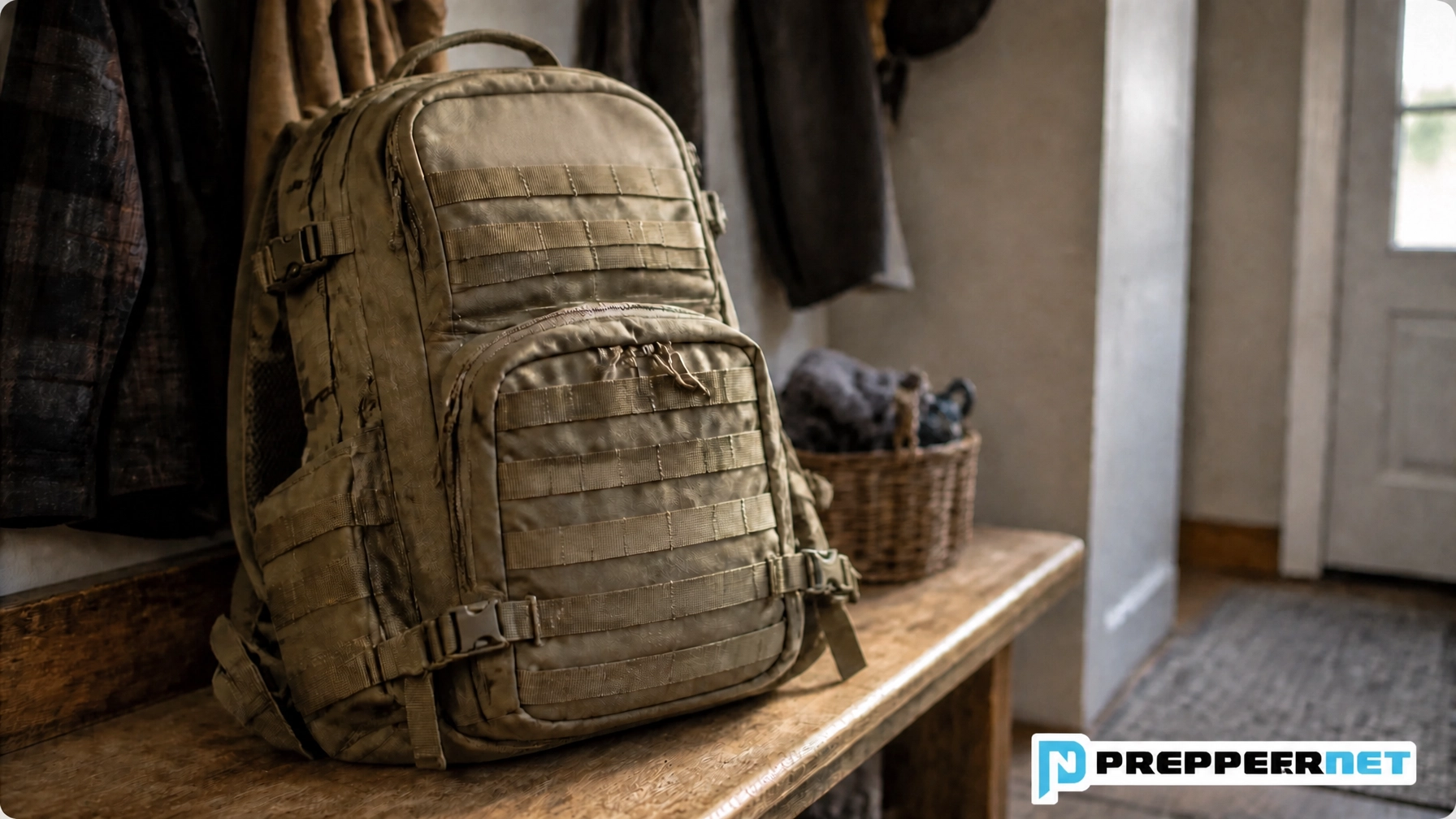
Don't buy a cheap school backpack. You need a bag designed for weight distribution and durability.
Action Items:
- Choose a bag with a capacity between 30L and 50L.
- Prioritize internal frames and padded waist belts.
- System Suggestion: The 5.11 Tactical Rush 24 Backpack is a gold standard for durability.
2. Water: The Non-Negotiable

If you have a gallon of water but no way to get more, you have a 24-hour plan, not a 72-hour one.
If you have a filter but no way to boil, you are missing a critical redundancy.
Water is heavy. You cannot carry 72 hours worth of water for a family of four. You must carry the ability to create potable water.
Action Items:
- Carry 1 Liter: Use a Stainless Steel Water Bottle that can be placed directly in a fire to boil water.
- Filter System: Pack a Sawyer Squeeze Water Filtration System. It’s light, effective, and fits on standard bottle threads.
- Redundancy: Throw in a pack of Water Purification Tablets for backup.
3. Food: High-Calorie, Low-Weight
Now is not the time for gourmet meals.
If your food requires three cups of water to cook, you are wasting your water supply.
If your food is heavy and canned, you are wasting your energy.
Focus on calorie density and morale.
Action Items:
- No-Cook Calories: Pack 2,000–3,000 calories per person per day in the form of protein bars, trail mix, and jerky.
- Emergency Rations: Include one Mainstay Emergency Food Ration block per person. It’s dense and won't make you thirsty.
- Morale Boosters: Instant coffee or hard candy can be the difference between a breakdown and a breakthrough for your kids.
4. Shelter and Warmth: Your Micro-Climate
Most people think of a tent.
Most people forget that a tent is heavy and slow to set up.
Your bag needs to provide a way to stay dry and maintain body heat immediately. Hypothermia is a silent killer, even in mild climates.
Action Items:
- High-Quality Poncho: A heavy-duty military-style poncho can be a raincoat, a tarp, or a ground cover.
- Sleeping System: Pack a lightweight Tactical Bivvy or a high-quality Mylar emergency blanket (the thick ones, not the dollar store versions).
- Fire Kit: Carry three ways to start a fire. A Ferrocerium Rod, a BIC lighter, and waterproof matches.
5. Tools: The Force Multipliers

A tool is useless if you don't know how to use it.
If you buy a $200 knife but never carved a stick, you have a $200 paperweight.
Keep your toolset simple and rugged. Quality over quantity.
Action Items:
- Fixed Blade Knife: You need a blade that won't snap under pressure. The Morakniv Companion is affordable and nearly indestructible.
- Lighting: A headlamp is mandatory. It keeps your hands free to work. The Petzl TIKKINA is reliable and bright.
- Multi-Tool: A Leatherman Wave+ handles the small repairs that a knife can't.
6. Skill Over Gear: The PrepperNet Philosophy
We say it often because it’s true: Gear can be lost, stolen, or broken. Skills stay with you forever.
If you have the best bug out bag list but haven't walked five miles with that bag on your back, you aren't prepared.
If you have a fire kit but haven't started a fire in the rain, you aren't prepared.
Real-world survival isn't about what you own; it’s about what you can do. This is why we build local communities. When you join a local PrepperNet group, you aren't just getting an interactive map. You are getting access to neighbors who can teach you how to use that gear effectively.
7. Communication and Navigation

If the cell towers go down, your GPS is a brick.
If you don't have a map, you are just wandering.
You need to know where you are going before the crisis happens.
Action Items:
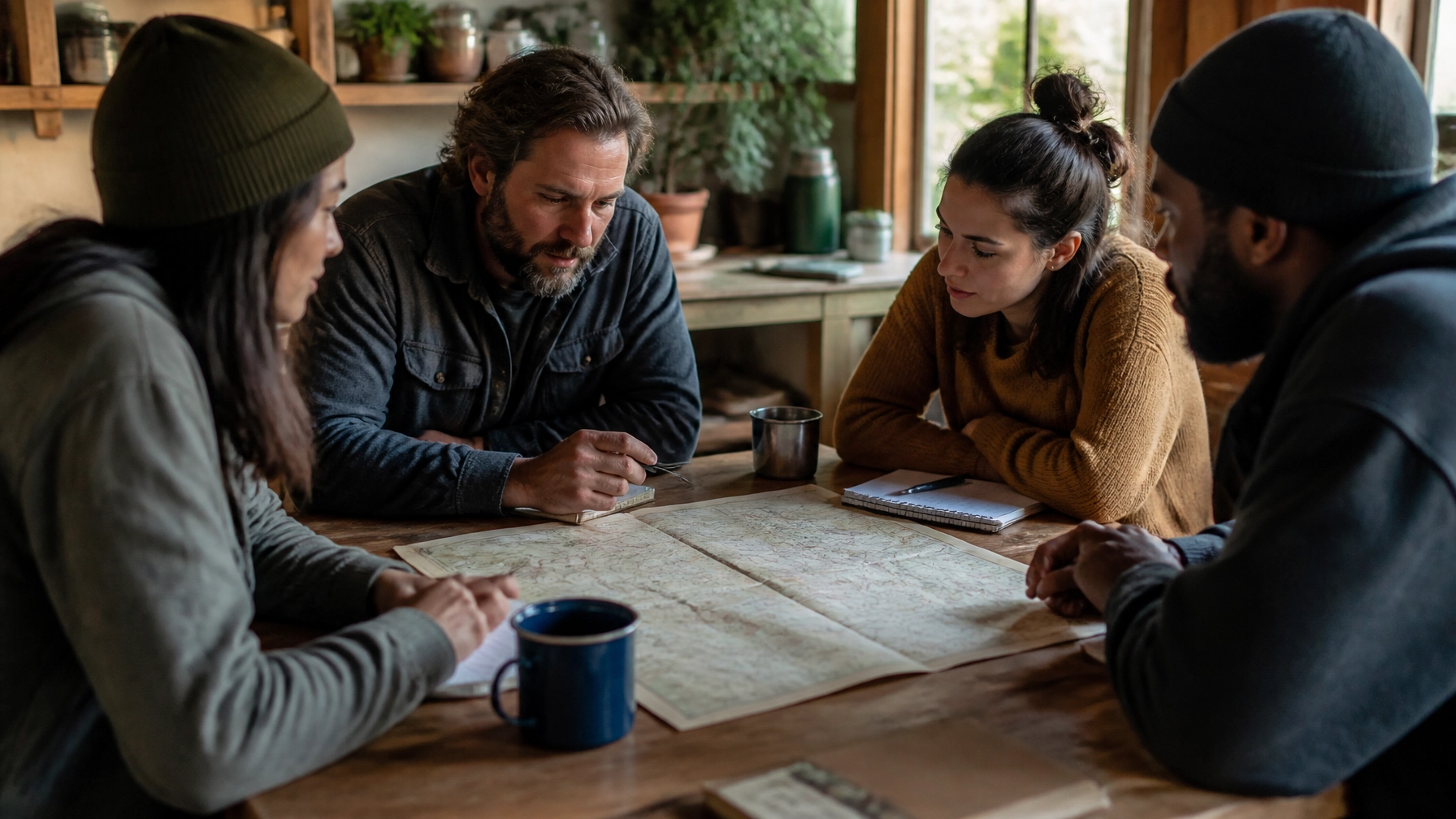
- Paper Maps: Get topographical maps of your local area and your primary/secondary evacuation routes. Keep them in a waterproof sleeve.
- Emergency Radio: A small NOAA Weather Radio keeps you informed on weather and civil updates.
- Analog Contact List: Write down every important phone number and address on paper. Your phone's contacts won't help if the battery is dead.
Common Questions
How much should my bug out bag weigh?
Ideally, no more than 20% of your body weight. For most adults, this means a target weight of 25–35 lbs. If it’s heavier, you are packing "fears," not "needs."
Should I pack a firearm?
If you are legally permitted and highly trained, yes. If you haven't trained with it, it is a liability, not an asset. Self-reliance requires discipline.
What about my kids?
Give them a small pack. Put a comfort item (toy/blanket), a whistle, their own water bottle, and their favorite snacks in it. It keeps them engaged and reduces their stress.
Step-by-Step: Building Your System
- Day 1: Select your pack. Don't go cheap. Focus on the RUSH24 or similar.
- Day 2: Build your water and food modules. Test your filter in the sink.
- Day 3: Assemble your first aid and hygiene kit. Focus on trauma and prescription meds.
- Day 4: Add your tools and lighting. Test your headlamp in a dark room.
- Day 5: Print your maps and documents.
- The Test: Put the bag on. Walk three miles. Note what hurts and what shifts. Adjust accordingly.
Your Next Move
A bag is a tool, but a community is a shield.
Don't do this alone. Thousands of Americans are already building their local networks through PrepperNet. We provide the guides, the partners, and the connections you need to ensure your family isn't just surviving, but thriving in the face of uncertainty.
Find your local PrepperNet group today and start training.
Metadata
- SEO Title: The Essential Bug Out Bag List: Survival Gear for Families
- Meta Description: Stop overpacking and start preparing. Here is the no-nonsense bug out bag list for everyday families focusing on high-quality survival gear and real skills.
- Excerpt: Most people wait until the sirens scream to start packing. Learn the PrepperNet approach to the 72-hour bug out bag: quality over quantity, and skills over gear.
- Featured Image Alt Text: A tactical tan backpack sitting on a wooden bench, representing the core of a family bug out bag list.
- Category: Preparedness
- SEO Keywords: bug out bag list, survival gear, emergency preparedness, 72-hour kit, prepper gear, family survival plan, tactical backpack, PrepperNet.