Survival Skills for Suburbanites | Practical Suburban Preparedness
Learn essential suburban survival skills: grey man tactics, water collection, foraging, and community networking for everyday families.
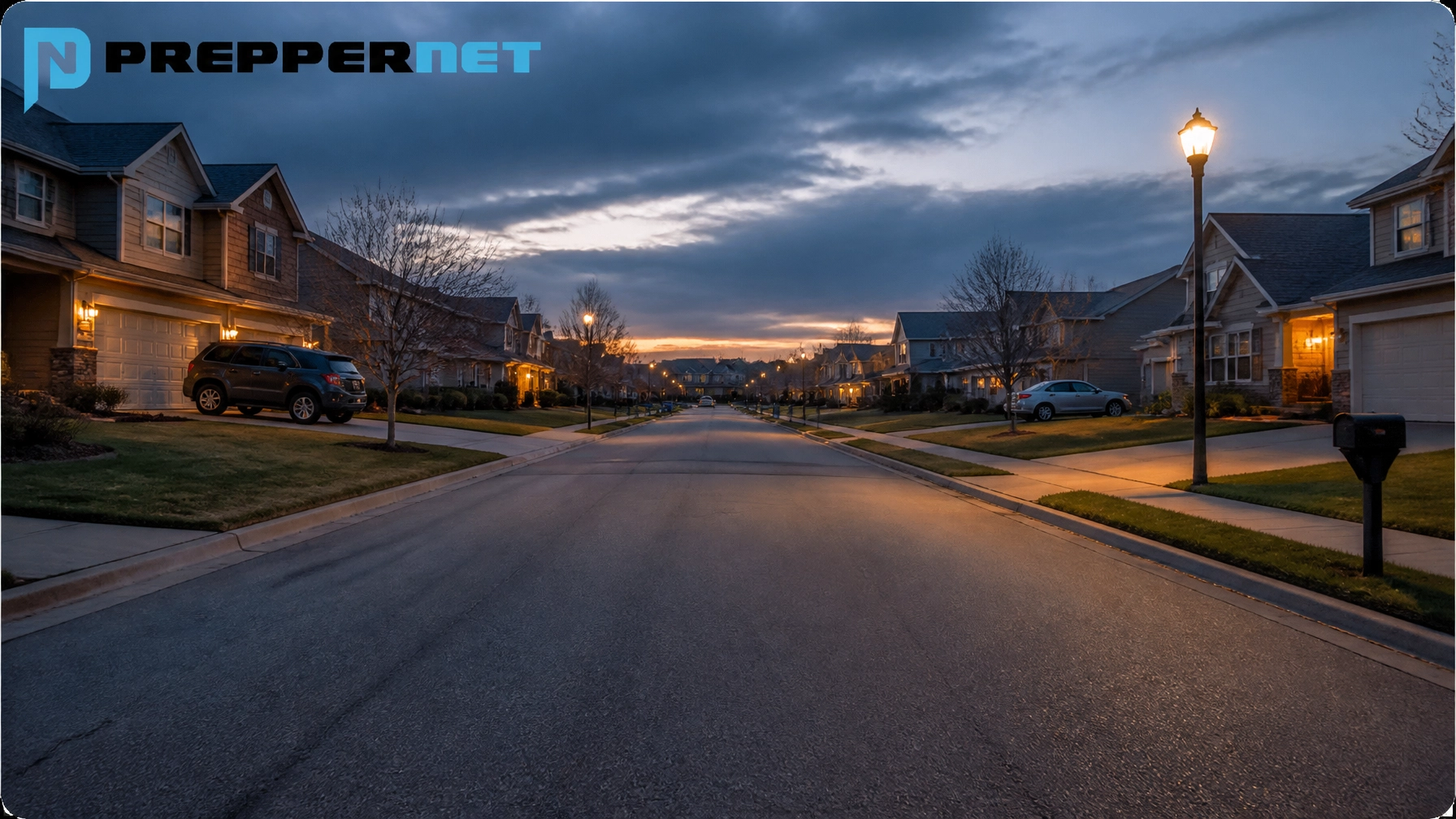
The suburbs are a trap.
Most people see manicured lawns and quiet cul-de-sacs as a haven of safety.
In reality, they are fragile ecosystems dependent on complex supply chains.
If the trucks stop moving, the grocery stores empty in 72 hours.
If the power grid fails, your smart home becomes a dark box.
If the water mains break, your suburban oasis becomes a desert.
You have a choice.
You can be the person standing in a FEMA line waiting for a bottle of water.
Or you can be the person who has already secured their home and family.
Self-reliance isn't just for the deep woods.
It’s for the driveway. It’s for the backyard.
It’s for the everyday families who refuse to be victims.
Skill Over Gear
Most people buy a fancy knife and think they’re ready.
Most people buy a generator and think they’re safe.
They are wrong.
Gear can be lost, broken, or stolen.
Skills belong to you forever.
A $500 water filter is a paperweight if you don’t know where to find water or how to maintain the filter.
A tactical vest is a target if you don't know how to move without being seen.
If you have the gear but lack the skill, your plan is incomplete.
If you have the skill but lack the gear, you can still survive.
Grey Man Tactics: The Art of Being Invisible

In a crisis, attention is a liability.
The "Grey Man" is someone who blends into their environment so perfectly that they are forgotten the moment they pass by.
Most preppers make the mistake of looking the part.
They wear camouflage in the city.
They have MOLLE webbing on their backpacks.
They have "Don't Tread on Me" stickers on their trucks.
This makes you a target for both criminals and authorities.
The Principles of Blending In:
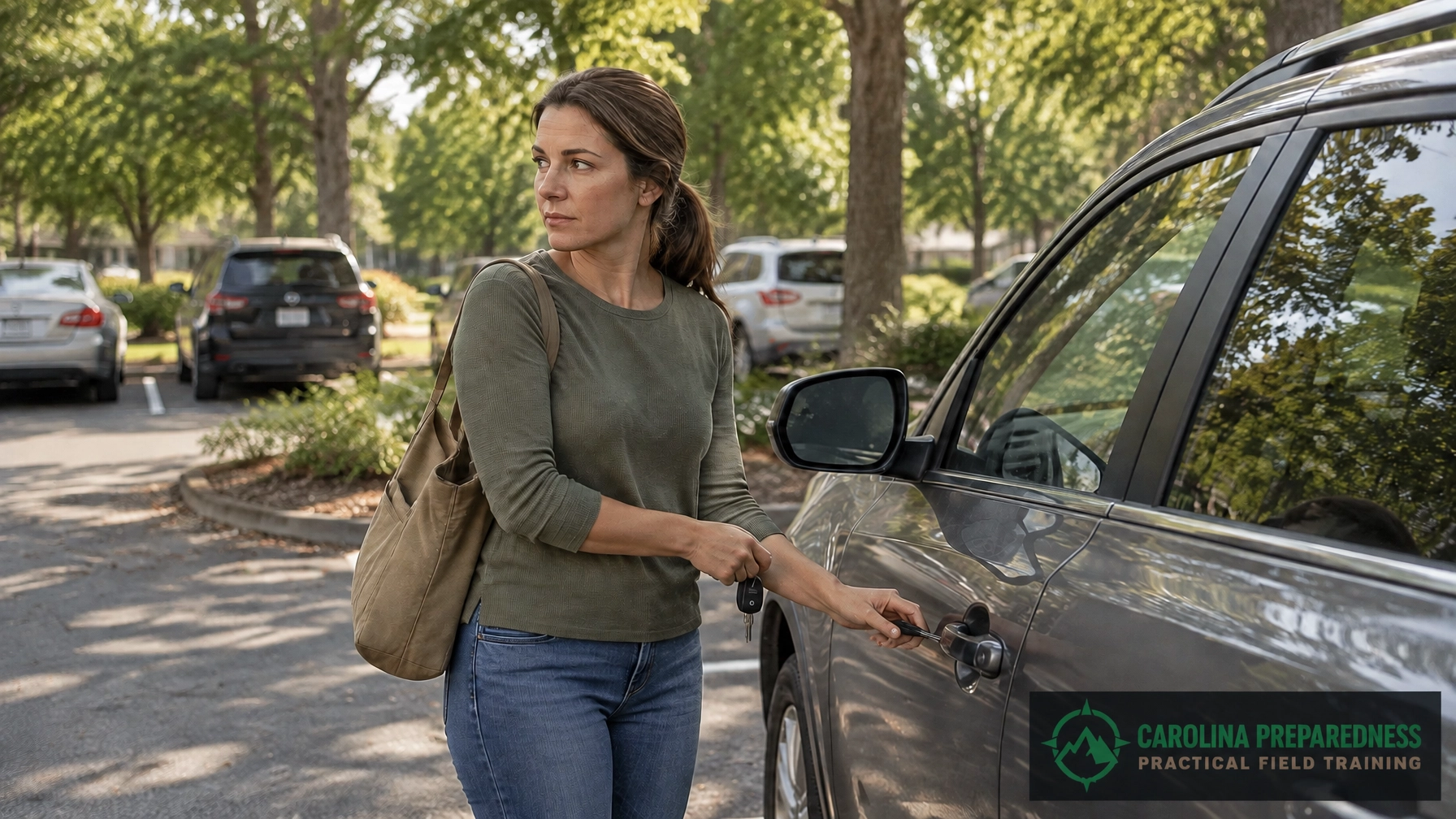
- Appearance: Dress like your neighbors. If everyone wears hoodies and jeans, wear a hoodie and jeans. Avoid tactical brands, bright colors, or political patches.
- Behavior: Move with purpose but not urgency. Panicked movement draws eyes.
- Gear: Use a standard school or laptop backpack. A discreet commuter bag is better than a military rucksack.
- Digital Footprint: Stop posting your "preps" on social media. You are telling the world exactly where the food is.
Action Items:
- Review your Everyday Carry (EDC) gear. Is it visible?
- Practice walking through a local store without making eye contact or drawing attention.
- Remove tactical or identifying stickers from your vehicle.
Water Systems: Beyond the Tap

If the taps go dry, you have three days to live.
In the suburbs, you cannot rely on a nearby river.
You must create your own utility system.
Storage is the Baseline:
You need at least one gallon per person, per day, for at least two weeks.
A family of four needs 56 gallons just for the bare minimum.
Don't just buy small bottles. Invest in stackable water containers that fit in a closet.
Collection is the Sustainability:
Your roof is a massive water collection surface.
If it rains for one hour, you can fill multiple 55-gallon drums.
Install rain barrels now.
If you wait for the emergency, the hardware stores will be empty.
Purification is the Life-Saver:
Stored water and rainwater are not always safe.
You must have a multi-stage system.
- Filtration: Use a gravity filter like a Berkey or similar system to remove particulates and bacteria.
- Chemical/Heat: Keep potable aqua tablets or a way to boil water as a backup.
Action Items:
- Calculate your family's 14-day water requirement.
- Install at least one rain barrel on a primary downspout.
- Learn how to empty your hot water heater, it’s a hidden 40-80 gallon reservoir.
Suburban Foraging: Calories in the Cul-de-Sac

You don't need a 1,000-acre forest to find food.
Most suburban yards are full of "weeds" that are more nutritious than grocery store spinach.
If you know what to look for, the park down the street is a grocery store.
If you don't, you are starving in a garden.
The Big Three Suburban Edibles:
- Dandelions: Every part is edible. The leaves are high in Vitamin A and C. The roots can be roasted for a coffee-like drink.
- Broadleaf Plantain: Not the banana-like fruit, but the common green leaf with vertical veins. It's edible and acts as a natural bandage for stings and cuts.
- White Clover: High in protein. The flowers can be eaten raw or dried for tea.
The Golden Rules:
- Positive ID: If you are 99% sure, you are 100% wrong. Use a regional foraging guide.
- The Spray Zone: Never harvest from lawns that use chemical pesticides or near busy roads with heavy exhaust.
Action Items:
- Walk your backyard today. Identify three plants you didn't plant.
- Download or buy a local foraging map for your specific state.
- Learn to identify poison ivy and hemlock, knowing what not to touch is just as important.
Community Coordination: The Power of the Neighborhood

The "Lone Wolf" dies. The pack survives.
One person cannot stay awake 24 hours a day to guard a house.
One person cannot be a doctor, a mechanic, and a farmer all at once.
If you don't know your neighbors, you don't have a security plan.
You don't need to tell them you're a "prepper."
You just need to build a community.
Building the Network:
- The Area Study: Know who lives on your street. Who is a nurse? Who has a chainsaw? Who has a generator? Read our guide on Area Studies for more.
- Communication: In a grid-down scenario, cell phones fail. Establish a neighborhood "meeting point" or use GMRS/FRS radios for short-range checks.
- Mutual Aid: Preparedness isn't about hoarding; it's about being the person others can rely on. When you provide value, you receive protection.
Action Items:
- Introduce yourself to three neighbors this week.
- Join a local PrepperNet Meetup Group to find like-minded families in your area.
- Organize a simple neighborhood "Night Out" or block party to assess the local culture.
Your 7-Day Suburban Readiness Plan
- Day 1: Buy four 5-gallon water jugs and fill them.
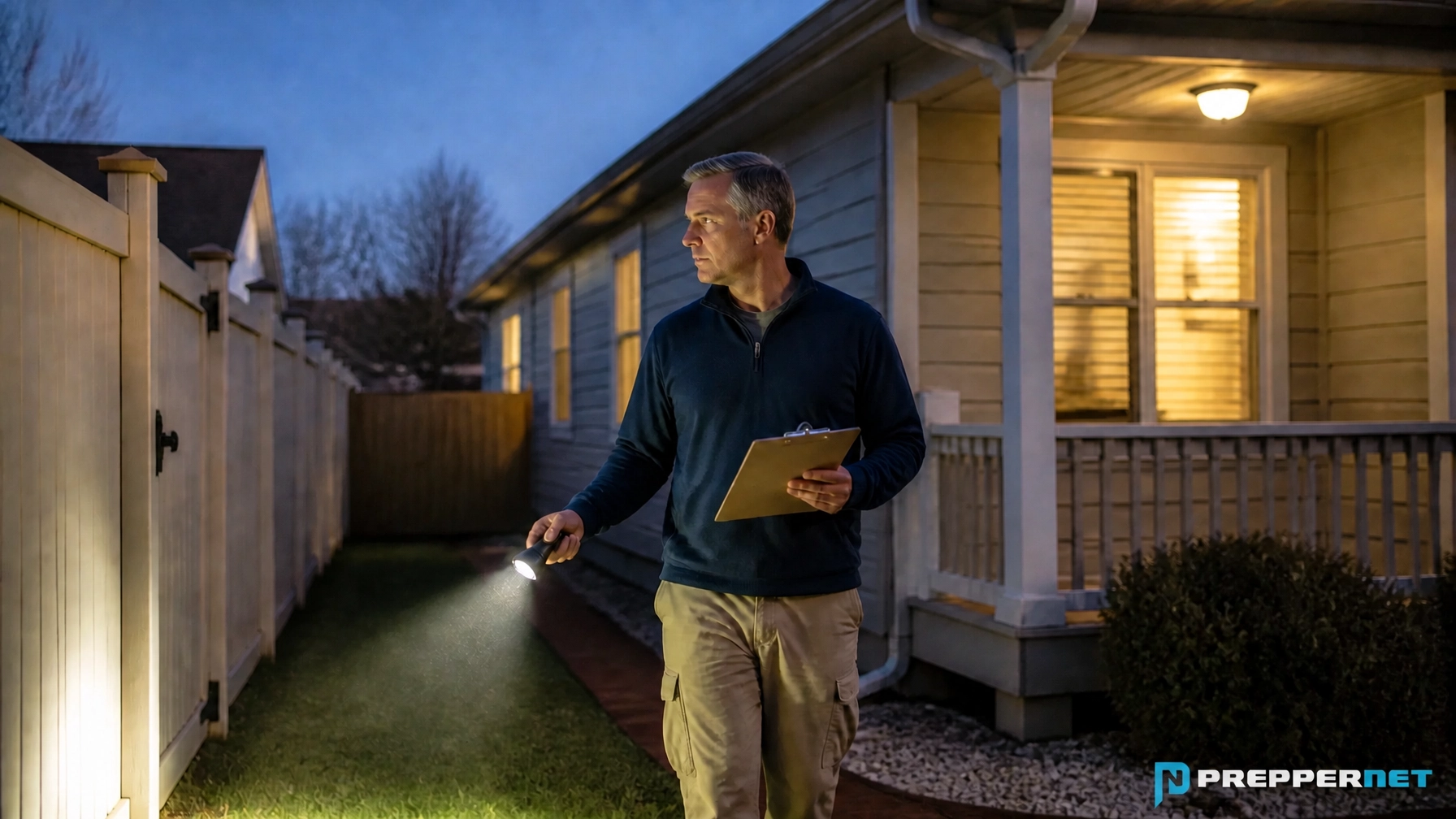
- Day 2: Walk your neighborhood. Identify two exit routes that aren't the main highway.
- Day 3: Assemble a "Blackout Kit", headlamps, spare batteries, and a battery-powered radio.
- Day 4: Identify five edible plants in your immediate vicinity.
- Day 5: Learn where your main gas and water shut-off valves are.
- Day 6: Audit your wardrobe. Remove "tactical" items from your daily wear.
- Day 7: Connect with one local person who shares your values of self-reliance.
Common Questions
Q: Is it legal to collect rainwater?
A: In most states, yes. Some western states have restrictions, but for emergency use, the law of survival overrides local ordinances. Check your local statutes for permanent installations.
Q: How do I talk to my spouse about this without sounding crazy?
A: Don't use the word "apocalypse." Use words like "resilience," "emergency budget," and "insurance." Focus on common events like power outages or storms.
Q: I live in an apartment. Can I still do this?
A: Yes. Focus on water storage under the bed, grey man movement in hallways, and building a network with your immediate floor neighbors.
The Mission Starts Now
Suburban survival isn't a hobby. It's a responsibility.
Your family is counting on you to be the leader when the systems fail.
Stop watching videos. Start doing the work.
Join the movement. Find your local group on our interactive map and start training with people who take this as seriously as you do.
Stay ready.
Metadata Summary:
- SEO Title: Survival Skills for Suburbanites | Practical Suburban Preparedness
- Meta Description: Learn essential suburban survival skills: grey man tactics, water collection, foraging, and community networking for everyday families.
- Excerpt: The suburbs are a trap for the unprepared. Learn how to turn your cul-de-sac into a stronghold with practical skills that prioritize "Skill over Gear."
- Featured Image Alt Text: A quiet American suburban street at dusk, illustrating the environment for suburban survival.
- Category: Preparedness
- Target SEO Keywords: suburban survival, grey man tactics, water collection, suburban foraging, prepper community, emergency preparedness for families.