First Thanksgiving: The Three-Day Harvest Feast
The 1621 harvest celebration was not a cozy dinner or a recurring holiday. It marked a season’s work, counted provisions and the hope of making it through winter.
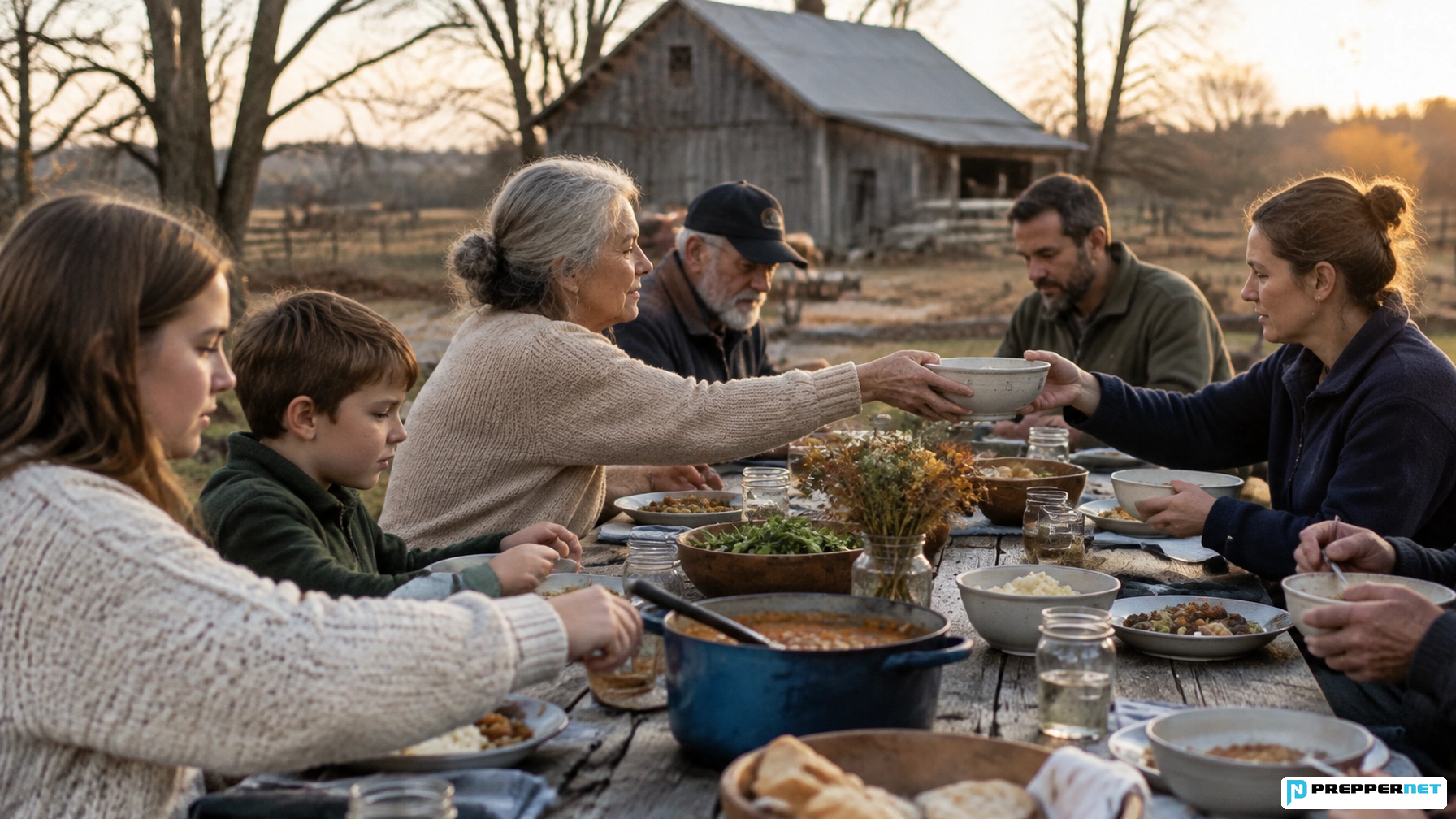
Three days of feasting was not indulgence. It was the sound of a family that knew it would eat in February.
Most people picture a table. Most people picture a single meal. Most people miss the point, which is that the meal happened because the storage was full.
The first Thanksgiving was not a dinner party. It was an inventory celebration.
The harvest was in. Food was available. The colony had a reason to believe it could get through winter. That is what they celebrated.
The winter that killed half of them
The Mayflower arrived at Plymouth in December 1620. The first winter was brutal. William Bradford wrote in Of Plymouth Plantation that of “one hundred and odd persons,” only “scarce fifty” remained by spring.
That is the stake behind the harvest celebration. These were not people treating food storage as a hobby. They had already seen what hunger and exposure could cost.
Tisquantum, known as Squanto, taught the colonists to plant corn and use fish as fertilizer. That knowledge helped them work toward a harvest.
If they had not learned to grow and store food, there would have been no second autumn. If your first year is a disaster, then your only question is whether you learned enough to survive the second.
What “ready for winter” actually looked like
Bradford described the work in plain terms. They “began now to gather in the small harvest they had, and to fit up their houses and dwellings against winter,” while recovered in health and strength and with “all things in good plenty.”
He also recorded an inventory.
Some colonists fished for cod, bass and other fish. Every family received a portion. As winter approached, waterfowl came into store. Bradford noted “great store of wild turkeys,” as well as venison. He also wrote that they had about a peck of meal a week per person, or Indian corn to that proportion after harvest.
A peck is a dry measure of roughly a quarter of a bushel. That is not a vague promise to “stock up.” It is a quantity a household could count and divide.
That is the practical heart of the history of Thanksgiving: they knew what food was available and what each family’s portion looked like. They were preparing for the season ahead, not guessing.
The three days
Edward Winslow’s account in Mourt’s Relation is the eyewitness description of the celebration. Pilgrim Hall Museum’s collection of the two primary sources preserves Winslow’s account and Bradford’s harvest-season record.
“our harvest being gotten in, our governor sent four men on fowling, that so we might after a special manner rejoice together, after we had gathered the fruits of our labors; they four in one day killed as much fowl, as with a little help beside, served the Company almost a week, at which time amongst other Recreations, we exercised our Arms, many of the Indians coming amongst us, and amongst the rest their greatest king Massasoit, with some ninety men, whom for three days we entertained and feasted, and they went out and killed five Deer, which they brought to the Plantation and bestowed on our Governor, and upon the Captain and others. And although it be not always so plentiful, as it was at this time with us, yet by the goodness of God, we are so far from want, that we often wish you partakers of our plenty.”
Winslow says four men brought in enough fowl in one day to serve the company almost a week. Massasoit arrived with ninety men. The colonists entertained and feasted them for three days. The Wampanoag contributed five deer. Fifty-three Mayflower survivors were present.
Here is the honest correction: this was a harvest celebration. The participants did not call it “Thanksgiving,” and it did not become a recurring holiday. Plymouth’s first recorded religious thanksgiving came in 1623, after rain ended a two-month drought.
Accuracy does not shrink the story. It strengthens it. These were real people in real danger who ate because the work was done.
Call them preppers
They would not have used the word “preppers.” But they stored food against a season when they could not work the same way. They ate what they grew and caught. They counted portions. They rejoiced when there was enough.
That is the practice, whatever label you use.
And the colonists did not do it alone. The Wampanoag had farmed and fished and managed this land for generations. Their knowledge of it mattered to the colonists’ ability to bring in a harvest.
How they made food last without a freezer
Bradford’s account gives us an inventory, not a preservation manual. It records fish, fowl, venison and corn, but it does not explain exactly how each item was preserved. We should not pretend the source tells us more than it does.
The modern lesson is still clear. Your freezer is a convenience. Your pantry is the part of your food storage system that does not depend on electricity.
The goal is not a full freezer. It is a counted store that can feed your household when the power is out. If you are comparing dry-food storage supplies or cooking equipment, these storage bag and oxygen absorber listings and cast-iron Dutch oven listings are comparison examples, not purchase instructions. Gear does not replace practice. Skill over gear.

Faith
Winslow connected their plenty to “the goodness of God.” The harvest was not just a lucky break. It was provision received after work, hardship and help from others.
That thread continues in the American story. In 1789, George Washington issued the first national Thanksgiving proclamation, calling it “the duty of all nations to acknowledge the providence of Almighty God.” In 1863, Abraham Lincoln set apart the last Thursday of November “as a day of Thanksgiving and Praise to our beneficent Father who dwelleth in the Heavens.” The National Archives documents Lincoln’s proclamation and the history of Thanksgiving becoming a national observance.
Thanksgiving stands out among American holidays as an act of gratitude to God. Gratitude is also a preparedness discipline. A grateful household counts what it has instead of panicking about what it lacks.
Family
The first Thanksgiving was communal. It was shared with neighbors and allies. Winslow recorded recreation and arms practice alongside the feasting. It was more than a menu.
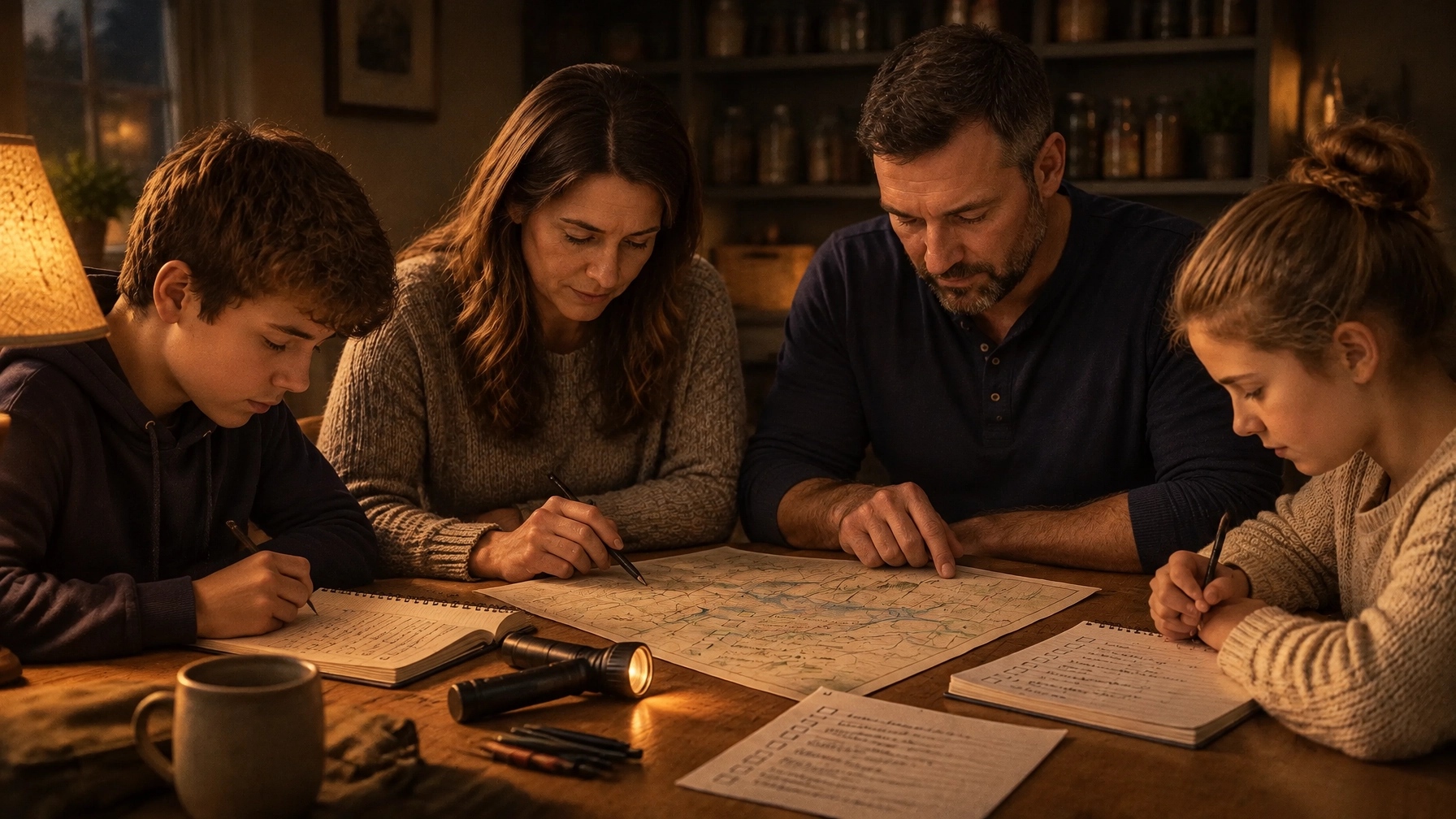
A family that practices together and eats together in ordinary times is better positioned to coordinate when circumstances change. Start a simple family preparedness plan this week.
Give the holiday a three-day shape:
- Day one: Cook and eat together.
- Day two: Check the pantry, water and medical kit together.
- Day three: Rest, give thanks and write down what your family learned.
An American idea
The first Thanksgiving 1621 story is not a myth to be embarrassed about, and it is not a fairy tale. It is a hard account of people who arrived with little, lost half their number, learned from neighbors, worked a season, stored what they could and gave thanks.
That pattern still matters. Prepare. Endure. Share. Give thanks.
Your Thanksgiving week readiness drill
Make this your modern version of fitting up the house against winter. Keep it simple enough to do while preparing for the holiday.
- Day one: Count and date everything in your pantry and freezer on one page.
- Day two: Count your water in gallons. Compare it with your household’s real daily use.
- Day three: Check the medical kit. Replace expired items.
- Day four: Cook one full meal from stored food only. No fresh grocery run.
- Day five: Write down what ran short. Name the one thing you will fix before the first of the year.
This is prepping for beginners: count first, test what you have, then correct the gap. Most people know they have supplies. Most people feel ready. Few people know how many meals those supplies actually provide.

Common Questions
Was turkey actually served?
Wild turkey was abundant and documented, but the exact menu is not recorded. The foods we picture today were not what was on that table. Documented foods available at the time included cod, bass, lobster, eels, waterfowl, wild turkey, venison and corn.
Was it a Thanksgiving?
Not by that name, and not a recurring holiday. It was a three-day harvest celebration. Plymouth’s first recorded religious thanksgiving came in 1623.
Why did it last three days?
Winslow says there were three days of entertainment and feasting. A celebration involving ninety guests takes days, and there was no schedule to keep.
Were the Pilgrims really preppers?
They stored food because survival depended on it. That is the whole of it.
What is the one thing to take from this?
Know your numbers. A family that knows how many weeks it can eat is a family that can think clearly.
Take the next step
Do the five-day drill. Then bring your pantry count to a local PrepperNet group meeting and compare it honestly with other families. For a practical starting point, get the free preparedness ebook.
Give thanks for what you have. Prepare your family to protect it. Faith, family and country are worth the work.
Metadata Summary
- SEO title: First Thanksgiving: The Three-Day Harvest Feast
- Meta description: The three-day harvest feast celebrated a successful harvest and winter food storage. Learn what the first Thanksgiving teaches families about preparedness.
- Excerpt: The 1621 harvest celebration was not a cozy dinner or a recurring holiday. It marked a season’s work, counted provisions and the hope of making it through winter.
- Featured image alt text: A multigenerational family and neighbors share food at a long outdoor table in late autumn
- Category: Preparedness
- Target SEO keywords: first thanksgiving, history of thanksgiving, thanksgiving history, what did the pilgrims eat, pilgrims first winter, harvest festival, thanksgiving traditions, food storage, long term food storage, family preparedness plan, prepping for beginners