Faith and the Oil You Can't Borrow: What the Ten Virgins Teach Us About Preparedness

The waiting reveals the difference
In Matthew 25:1–13, Jesus tells of ten virgins who take their lamps to meet a bridegroom. Five are wise and bring extra oil. Five are foolish and bring no reserve.
The bridegroom is delayed. At midnight, the announcement comes: he is on his way. The lamps of the five without extra oil are going out, and they ask the others to share. The wise refuse, saying there may not be enough for everyone. While the unprepared go to buy oil, the bridegroom arrives, the door closes, and the foolish are left outside. The bridegroom tells them, “I do not know you.”
It is an uncomfortable ending. So is the refusal to share. But the story is not a simple lesson in generosity or a checklist for emergency supplies. Jesus is teaching about readiness for his coming, and the weight of that readiness is personal.
The parable also offers a sober picture of wisdom and presumption. The delay exposes the difference between appearing ready for a moment and being ready to wait.
Faith trusts God for tomorrow. Presumption assumes tomorrow will look exactly like today.
All ten had a lamp
Every one of the ten brought a lamp. From the outside, they looked prepared for the same occasion.
The difference was not a public display of devotion. It was the reserve each carried beyond the moment. Five had accounted for a longer wait. Five had not.
That distinction matters in the life of faith. A good intention is not the same as readiness. Nor is a confident appearance proof that we have thought through what faithfulness may require.
This is not a claim that household supplies are the “oil” in Jesus’ parable. Its central warning concerns being ready for the bridegroom. But the pattern is worth noticing: wisdom thinks beyond the immediate scene. It does not assume that because today is manageable, tomorrow will require nothing more.
Why the oil could not be borrowed
The wise virgins’ answer sounds severe until we notice the practical limit: in that moment, they could not divide what they had without risking that no one would have enough. The oil was needed then, and each lamp needed its own supply.
Some forms of preparation work the same way. Help from others matters, but it cannot replace every personal responsibility. At 2 a.m. during an outage, you cannot count on a neighbor having enough water for your household, your medication being available at the pharmacy, or someone else knowing the skill you never practiced.
Community is essential. So is having a plan of your own.
A reserve is not a rejection of others. It is one way to avoid placing an unreasonable burden on them when time and options are limited.

Presumption dressed up as faith
Sometimes people treat faith and planning as opposites: either trust God, or make practical preparations. Scripture does not require that choice.
The Bible does not call the five virgins wicked. It calls them foolish. Their failure was not that they lacked dramatic zeal. They simply did not bring what the situation required.
Wisdom repeatedly includes thoughtfulness and follow-through. Proverbs 21:5 commends the plans of the diligent. Proverbs 24:3–4 says a house is built through wisdom and established through understanding. And in Luke 14:28–30, Jesus describes a builder who first sits down to count the cost.
These passages do not promise that every plan will prevent hardship. They do show that careful thought is not a failure of trust.
The question is not, “Do I trust God, or do I prepare?” It is, “How can I trust God while acting wisely with what I have been given?”
Preparedness without fear
Philippians 4:6–7 calls believers away from anxiety and toward prayer, thanksgiving, and trust in God. That posture belongs alongside preparation.
Planning can become fear-driven. It can also be a steady expression of responsibility. There is a difference between hoarding from fear and provisioning from care: one is ruled by the need to control every outcome; the other makes reasonable provision for people and responsibilities entrusted to us.
Faith does not promise that we can control tomorrow. It teaches us to meet today with prayer, wisdom, and love for our neighbors and families.
Preparedness is not a way to guarantee comfort. It is a way to reduce avoidable strain and make it easier to respond thoughtfully when circumstances change.
What is in your jar?
Start with a modest reserve. The goal is not a perfect household or a dramatic stockpile. It is to identify a few things you would not want to have to borrow in a difficult hour:
- Water stored safely for your household
- A week of food you actually eat
- Necessary medications and a way to track refills
- Copies of important documents
- A little cash in small denominations
- One practical skill you have practiced
- One person who knows your plan and how to reach you
Your list will depend on your household, health needs, location, and budget. Begin with what is realistic. Review it as your circumstances change.
An evening exercise for this week
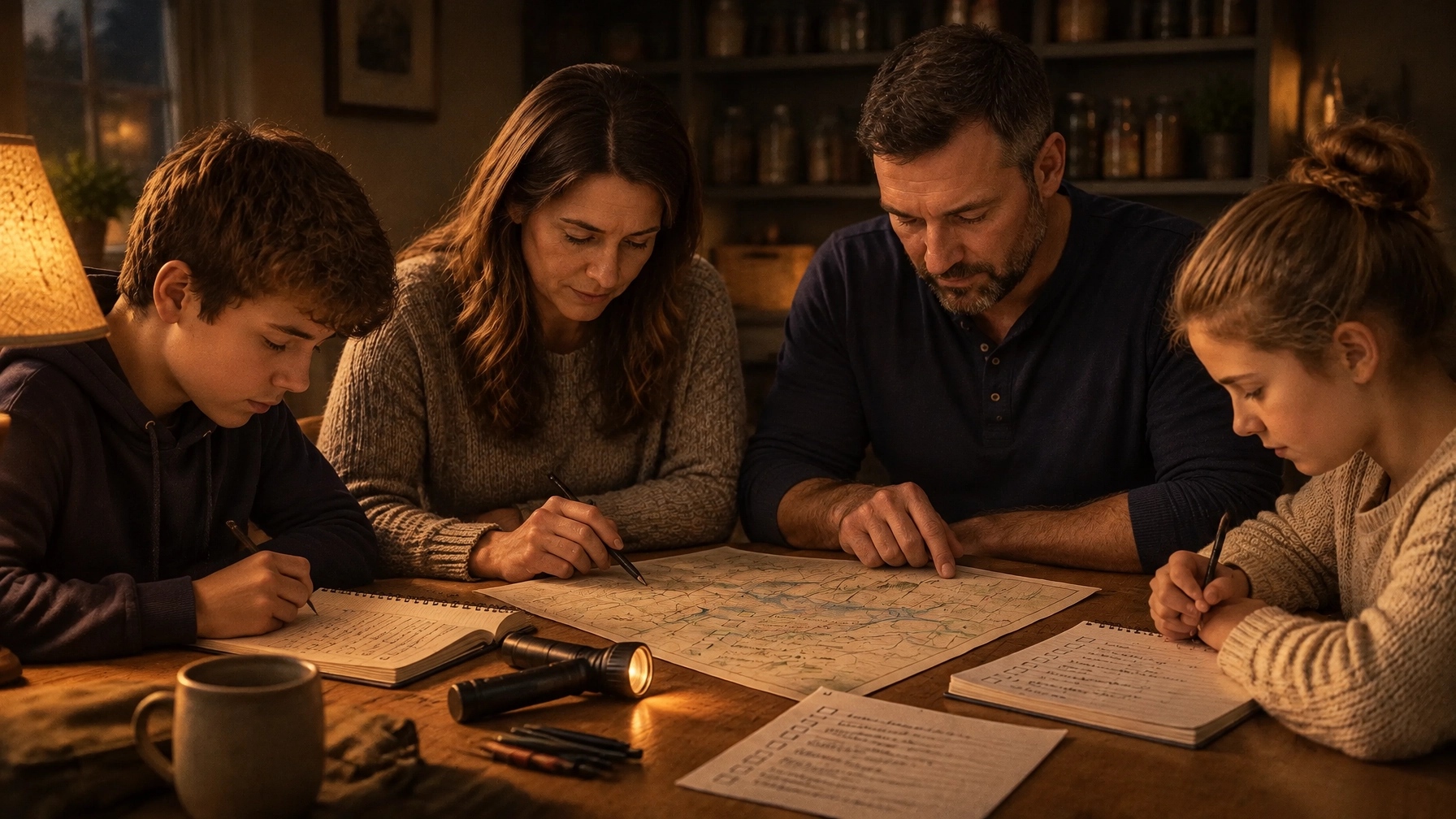
Take ten minutes and write down everything you are currently counting on someone else to have or provide.
Perhaps it is the store being open, the electrical grid staying on, the pharmacy having your medication, the government arriving quickly, or the neighbor with the generator being available.
Circle the three assumptions that feel most fragile. Choose one and take a first step to strengthen it. That might mean filling safe water containers, arranging a medication refill conversation with your clinician, saving a small amount of cash, or asking a neighbor how you can coordinate during an outage.
One step is enough to begin. Review the rest later.
Where this belongs in the church
A congregation can encourage preparedness without becoming fearful or insular. Begin with ordinary acts of care: help people think through household needs, identify who may need extra support, and make sure members know how to communicate if power or phone service is disrupted.
Preparation in community should build responsibility and connection, not suspicion. A useful group conversation is honest about limits, respectful of different resources, and focused on practical ways to serve one another.
For a Sunday school class, small group, or men’s group, discuss:
- What stands out to you about the delay in Jesus’ parable?
- Where might we be assuming tomorrow will look like today?
- What household reserve would be most useful for our members to build?
- Who in our congregation may need help making a simple plan?
- How can we prepare in a way that strengthens service and community rather than fear?
A group that wants a practical next step can explore Prepare The Church and its group-focused resources. For a community-centered approach, see Prepared Together. The Case for Christian Preparedness also considers how faith and practical readiness can belong together. To connect with a wider preparedness community, visit PrepperNet.

Keep a quiet reserve
Jesus’ parable asks us to take readiness seriously. It does not ask us to live in panic. Its warning is about the danger of presuming we can put off what matters until the moment arrives.
For this week, choose one reserve to build or one practical step to take. Pray, make a simple plan, and follow through at a pace your household can sustain.
Faith trusts God for tomorrow. Wisdom helps us prepare for it, and love reminds us who we are preparing to serve.
Details
Title: Faith and the Oil You Can't Borrow: What the Ten Virgins Teach Us About Preparedness
Slug: faith-and-the-oil-you-cant-borrow-ten-virgins
Excerpt: Jesus’ parable of the ten virgins offers a sober lesson in wisdom, readiness, and the limits of presumption. Explore how faith and practical preparedness can work together without fear.
SEO title: Faith and Preparedness: The Ten Virgins and the Oil You Can't Borrow
Meta description: What do the ten virgins teach about faith and preparedness? Explore wisdom over presumption, personal readiness, and practical steps rooted in trust.
Featured image alt text: A small oil lamp and reserve oil vessel glowing with warm amber light in a dark room
Tags: Faith and Preparedness, Faith, Jesus, biblical preparedness, Christian preparedness, stewardship, wisdom, family preparedness