Building a 30-Day Food Supply on a Normal Grocery Budget
Learn how to build a 30-day emergency food supply with normal groceries, including quantities per person, shelf life, storage conditions, rotation, and a simple beginner plan.
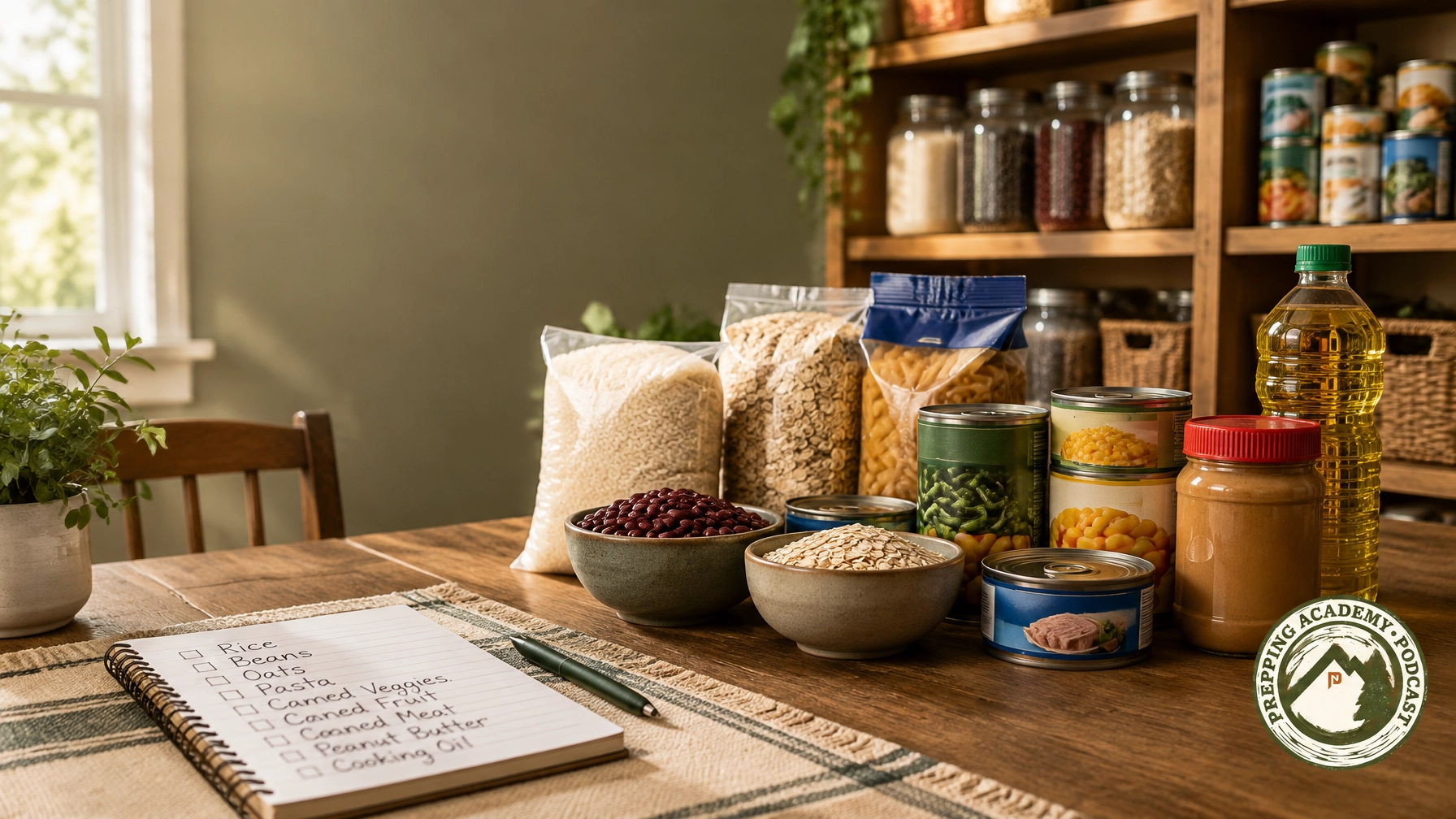
A 30-day food supply doesn't require an expensive freeze-dried food kit or a spare room full of buckets.
We can build a practical emergency pantry with regular groceries, a simple budget, and a rotation plan. The goal is to store food your household already eats, then replace it as you use it.
Food matters. But community is still the number one prep. A pantry can help your household through a short disruption. A trusted group of neighbors, friends, and family can help with cooking, childcare, transportation, medical needs, security, and recovery.
This guide covers how much to store, what to buy, how to stay within a normal grocery budget, and how to build a food plan that works with a Mutual Assistance Group.
Start with a 30-day calorie target
A useful starting point is about 2,000 calories per adult per day.
For 30 days, that equals:
- 60,000 calories per adult
- 120,000 calories for two adults
- 240,000 calories for a family of four
This is a planning number, not a medical prescription. Children, older adults, people with health conditions, and highly active people may need different amounts.
You don't need to count every calorie perfectly. Use the target to make sure your pantry contains enough energy from staples, then add protein, fruits, vegetables, and familiar foods for nutrition and variety.
A reasonable starting supply for one adult includes:
- 10 pounds of rice
- 5 pounds of pasta
- 5 pounds of dry beans or lentils
- 5 pounds of rolled oats
- 2 large jars of peanut butter
- 64 ounces of cooking oil
- 10 cans of meat, fish, or other protein
- 15 cans of vegetables
- 8 cans of fruit
- Salt, seasonings, bouillon, and basic baking ingredients
These quantities are approximate. Adjust them for allergies, medical diets, cultural preferences, and the cooking equipment you have available.
If you store food for a family, multiply the list by the number of people. Then adjust for children and anyone who eats significantly more or less than the adult baseline.
Use the foods you already buy
The most affordable emergency food supply is usually a larger version of your normal pantry.
If your family doesn't eat dry beans, buying 50 pounds of them may not be a good first step. Food storage only works when people will actually eat the food. Start with meals your household already knows how to prepare.
Good budget-friendly staples include:
- Rice
- Pasta
- Oats
- Dry beans and lentils
- Canned beans
- Peanut butter
- Cooking oil
- Canned vegetables
- Canned fruit
- Canned chicken, tuna, and other protein
- Shelf-stable milk
- Salt, spices, sauce, and bouillon
Store brands, discount grocers, warehouse stores, and sale prices can reduce costs. We can also build the supply gradually instead of trying to purchase everything at once.
A simple four-week buying plan
Week 1: Build the base
Buy:
- 5 pounds of rice
- 2 pounds of dry beans or lentils
- 2 pounds of oats
- 2 pounds of pasta
- 32 ounces of cooking oil
- 4 cans of vegetables
- Salt and two seasonings your family uses
Week 2: Add calories and protein
Buy:
- 5 more pounds of rice
- 3 pounds of dry beans or lentils
- 3 pounds of oats
- 3 pounds of pasta
- 2 jars of peanut butter
- 5 cans of meat, fish, or other protein
Week 3: Add variety
Buy:
- 8 cans of vegetables
- 8 cans of fruit
- 5 cans of beans
- Shelf-stable milk or a milk substitute
- Pasta sauce, canned tomatoes, or other meal ingredients
Week 4: Finish and test the plan
Buy:
- The remaining 32 ounces of cooking oil
- 5 more cans of protein
- Any missing staples
- Snacks and comfort foods
- Ingredients for one no-electricity meal
Use prices in your area to set a weekly limit. Many households can make steady progress by adding one or two extra pantry items per shopping trip rather than treating food storage as a separate major purchase.
Also budget for a manual can opener, storage bins, and an alternative cooking method if you don't already have them.

Store food under the right conditions
Storage conditions affect shelf life more than many people realize.
Keep food:
- Cool: Avoid hot attics, sheds, and garages when possible.
- Dry: Keep food away from leaks, condensation, and damp floors.
- Dark: Store oils and other light-sensitive foods in cabinets or opaque containers.
- Pest-resistant: Use sealed bins or food-grade containers for bulk staples.
Original packaging is often enough for a 30-day supply that you plan to rotate. For longer storage, dry staples can be repacked in properly sealed mylar bags with oxygen absorbers and placed inside rigid containers.
Don't use oxygen absorbers with moist foods, oil, or foods that aren't appropriate for that method. When in doubt, follow the packaging instructions or use established food-storage guidance.
Inspect cans before use. Discard cans that are bulging, leaking, badly rusted, or deeply damaged. The USDA food product dating guidance can help explain the difference between quality dates and safety concerns.
Know the realistic shelf life
Shelf life depends on packaging, temperature, moisture, and the condition of the food.
As general planning ranges:
- White rice, dry beans, lentils, pasta, and oats often store well for several years when kept dry and cool.
- Vegetable oil usually needs to be replaced sooner because it can become stale or rancid.
- Peanut butter commonly has a shorter storage window than dry staples.
- Commercially canned food often remains useful for years when cans are undamaged and stored correctly.
- Freeze-dried and dehydrated foods may have much longer stated shelf lives, but they usually cost more.
Treat “best by” dates as a quality guide, not a guarantee that the food becomes unsafe that day. Use your judgment, inspect the package, and follow food safety guidance.
Most importantly, don't buy food that you have never prepared. A 25-year shelf life doesn't help if your family won't eat it or you don't know how to cook it.
Rotate your supply instead of hiding it
Use a simple first-in, first-out system.
Put newer items behind older items. Mark the purchase month on the package when you bring it home. Use the oldest items first and replace them during your normal grocery trips.
Every month, check:
- Cans that are close to their quality date
- Opened or damaged packages
- Oil and nut butter
- Foods your family no longer likes
- Items affected by heat, moisture, or pests
Cook one meal from your stored food each week. This gives you practice and reveals problems before an emergency.
Can you cook rice and beans without electricity? Do you have enough water? Can someone in your household open every container? Do your recipes require ingredients you didn't store?
The latest Prepping Academy episode on practical preparedness skills makes the same point: skills and practice often matter more than owning more equipment.
Include faith, stewardship, and wise planning
Preparedness isn't about fear. For many families, it is an act of stewardship.
Planning ahead can help us care for our households and serve others during a difficult season. Proverbs 21:20 speaks about the value of wise preparation, and Joseph's work in Genesis 41 provides a well-known example of storing resources before a period of shortage.
That doesn't mean we can predict every emergency or control every outcome. It means we can make reasonable preparations with the resources we have.
Start where you are. Set aside a small amount from each grocery trip. Avoid debt for unnecessary gear. Share what you learn. Pray for wisdom, and build habits that make your household more capable.
A food supply should support faithfulness, generosity, and calm decision-making, not panic buying or fear-driven hoarding.
Build the food plan around your community
Your household is important. Your tribe is essential.
A 30-day food supply becomes more useful when it connects to a larger community plan. One person may have extra rice. Another may have gardening experience. Someone else may know first aid, can repair equipment, or has a safe way to cook without power.
Start with people you already know:
- Trusted neighbors
- Family members
- Church members
- Homesteaders
- Coworkers
- Friends who share your interest in preparedness
Don't begin with a demand for commitment. Start with conversations and small projects. Share a meal made from stored food. Compare grocery prices. Practice a neighborhood communication plan. Help one another rotate supplies.
Trust is built over time.
A useful Mutual Assistance Group can discuss:
- Who has cooking equipment
- Who can provide medical or first-aid support
- Who has transportation
- Who can help older adults or people with disabilities
- Who has gardening, repair, or communications skills
- How the group will share information during an outage
- Which supplies should be stored individually and which can be shared
Keep personal inventories private. A community plan doesn't require everyone to disclose everything they own. It requires enough trust and communication to know how you can help one another.
The Prepping Academy podcast episode on building a MAG offers a practical starting point. You can also connect with preparedness-minded people through PrepperNet.

Start with one grocery trip
You don't need a perfect pantry before you begin.
On your next trip, buy:
- One extra staple
- One protein
- One fruit or vegetable
- One item your family enjoys
Write down what you bought. Store it correctly. Rotate it into regular meals. Repeat next week.
After 30 days, you may have the beginning of a useful emergency food supply without changing your entire budget.
The goal is not to own the most food. The goal is to become more capable, more consistent, and better connected to the people around you.
Community is the number one prep. Food storage is one practical way to strengthen it.
SEO Metadata
SEO Title: Building a 30-Day Food Supply on a Normal Grocery Budget
Meta Description: Learn how to build a 30-day emergency food supply with normal groceries, including quantities per person, shelf life, storage conditions, rotation, and a simple beginner plan.
Focus Keyword: 30-day food supply
Tags: 30-day food supply, emergency food storage, food storage plan, emergency preparedness, budget prepping, pantry rotation, shelf-stable food, survival food, mutual assistance group, MAG, PrepperNet, The Prepping Academy
Featured Image Alt Text: A modest kitchen pantry stocked with everyday grocery staples for a 30-day emergency food supply
Featured Image Caption: Build a practical 30-day food supply with everyday groceries, steady rotation, and a normal household budget.