7 Deadly Water Storage Mistakes & How to Fix Them | Forrest Garvin
Most people think they are prepared because they have a few flats of bottled water. They are wrong. Discover the 7 fatal flaws in your water plan and how to fix them today.
Water is not a luxury. It is the baseline for your survival.
Most people think they are prepared because they have a few flats of bottled water from the grocery store sitting in the garage. Most people are wrong. Most people will find out too late that their "plan" is nothing more than a temporary delay of the inevitable.
If the grid goes down, your tap stops flowing. If your tap stops flowing, your countdown starts. Without water, you have three days. That is the functional reality.
I see the same mistakes over and over again. These aren't just "oversights." They are failures that can cost you your life or the lives of your family.
Stop guessing. Start building a system.
1. Storing Too Little Water
The most common mistake is underestimating your family's needs. The "one gallon per person per day" rule is the absolute minimum for survival. It does not account for hygiene, cooking, or high-heat environments.
If you have 10 gallons for a family of four, you have less than three days of security.
Action Items:
- Calculate your baseline: 1 gallon x [number of people] x 14 days.
- Add 20% for sanitation and cooking.
- Don't forget pets; a large dog can drink as much as a human.
- Aim for a 2-week supply as your first major milestone.
2. Using the Wrong Containers
Reusing old milk jugs or soda bottles is a recipe for disaster. Milk proteins linger in the plastic and breed bacteria. Transparent bottles allow light to trigger algae growth. Thin plastics break down and leak over time.
If you use non-food-grade containers, you are poisoning your own supply.
Action Items:
- Only use FDA-approved, BPA-free, food-grade plastic.
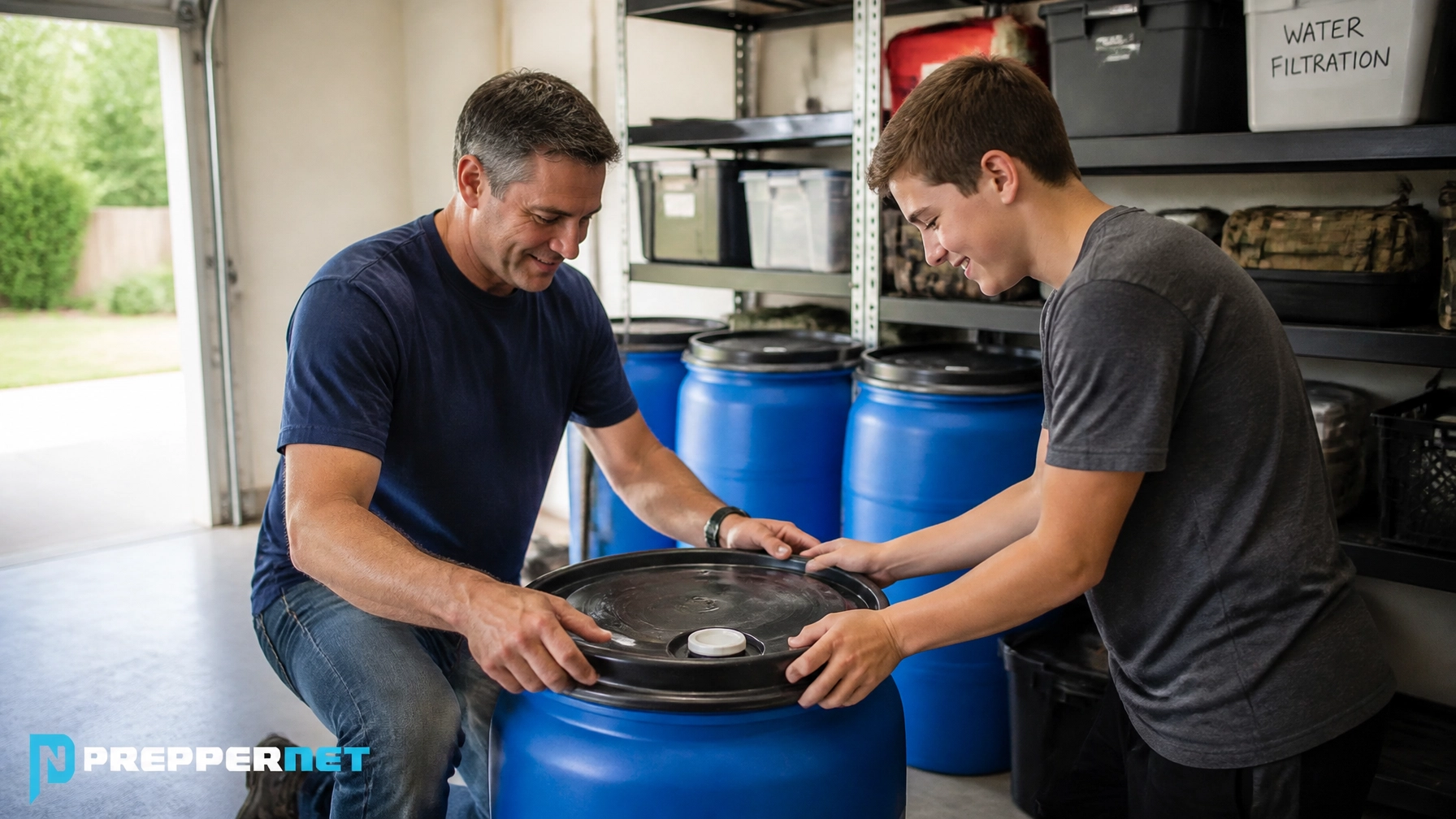
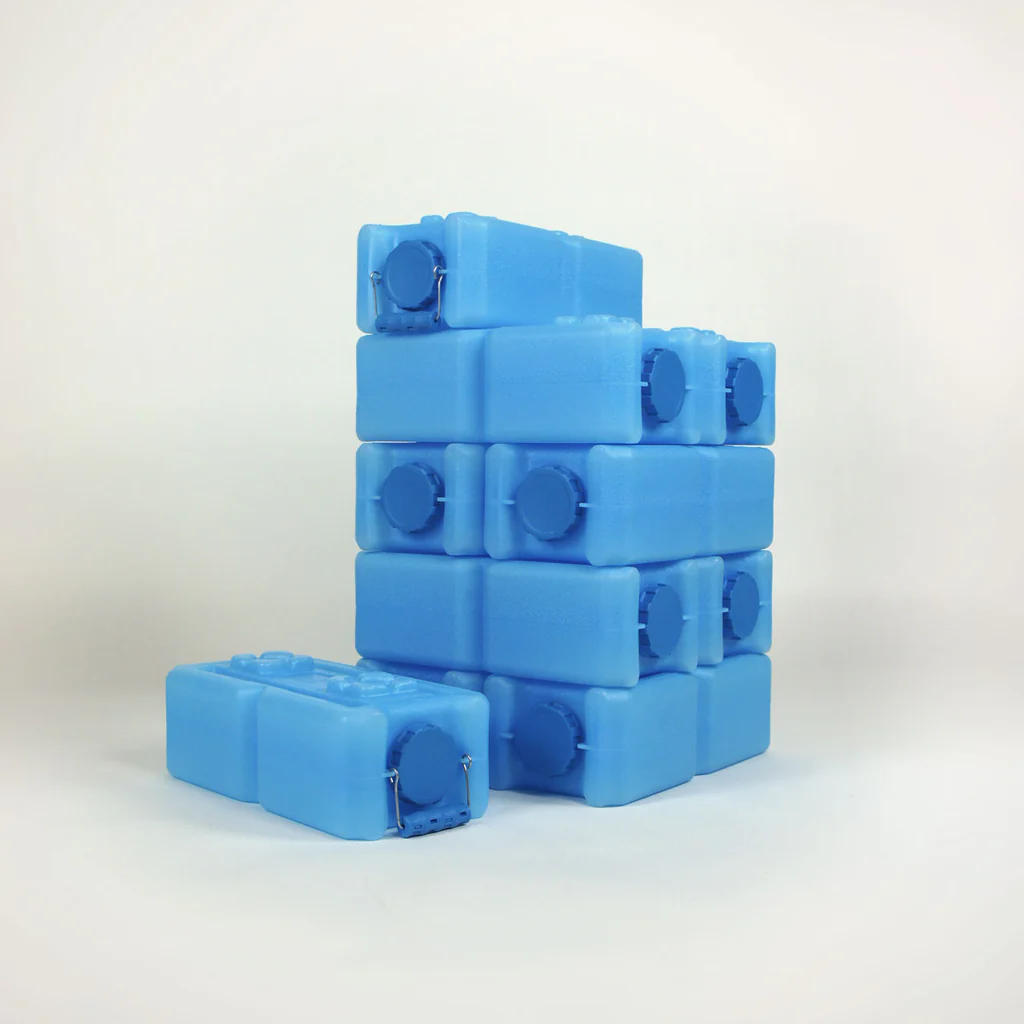
- Invest in stackable WaterBricks or heavy-duty 55-gallon barrels.
- Avoid glass for large-scale storage; it breaks during movement or seismic events.

3. Filling Without Sanitizing
Rinsing a new barrel with a garden hose is not sanitizing. Even "clean" tap water contains microbes that will multiply over months of storage if the container isn't sterile.
If you don't sanitize the container, you are storing a petri dish, not drinking water.
Action Items:
- Wash the container with dish soap and rinse thoroughly.
- Use a solution of 1 teaspoon of unscented household bleach per quart of water.
- Swish it around, let it sit for 30 seconds, and air dry before filling.

4. Storing in the Wrong Environment
Heat and sunlight are the enemies of stored water. Heat accelerates the leaching of chemicals from plastic into the water. Sunlight promotes the growth of algae and bacteria. Storing water near gasoline, pesticides, or paint is equally dangerous; plastic is porous and can absorb vapors.
If you store your water in a hot, sunlit garage next to the lawnmower gas, your water will be toxic when you need it.
Action Items:
- Keep water in a cool, dark place (50–70°F is ideal).
- Store containers off the concrete floor to prevent chemical absorption and temperature fluctuations.
- Use an interior closet or a dedicated basement area.
5. Neglecting Rotation
Water doesn't "go bad," but containers fail and water loses its oxygen, making it taste "flat." More importantly, the seal on your container can degrade over time.
If you don't rotate your water every six months, you won't know your containers are leaking until your storage area is flooded.
Action Items:
- Label every container with the fill date.
- Set a recurring alert on your phone for a "Water Refresh Day" every 6 months.
- Use the old water for your garden or laundry, then sanitize and refill.
6. Zero Redundancy for Treatment
Storage is finite. Eventually, your barrels will run dry. If you haven't practiced the skill of sourcing and treating "wild" water, your preparedness ends the moment your last barrel is empty.
If you have 100 gallons of storage but no filter, your plan is incomplete.
Action Items:
- Keep a supply of unscented liquid bleach (5–9% sodium hypochlorite).
- Master the "Boil and Filter" method.
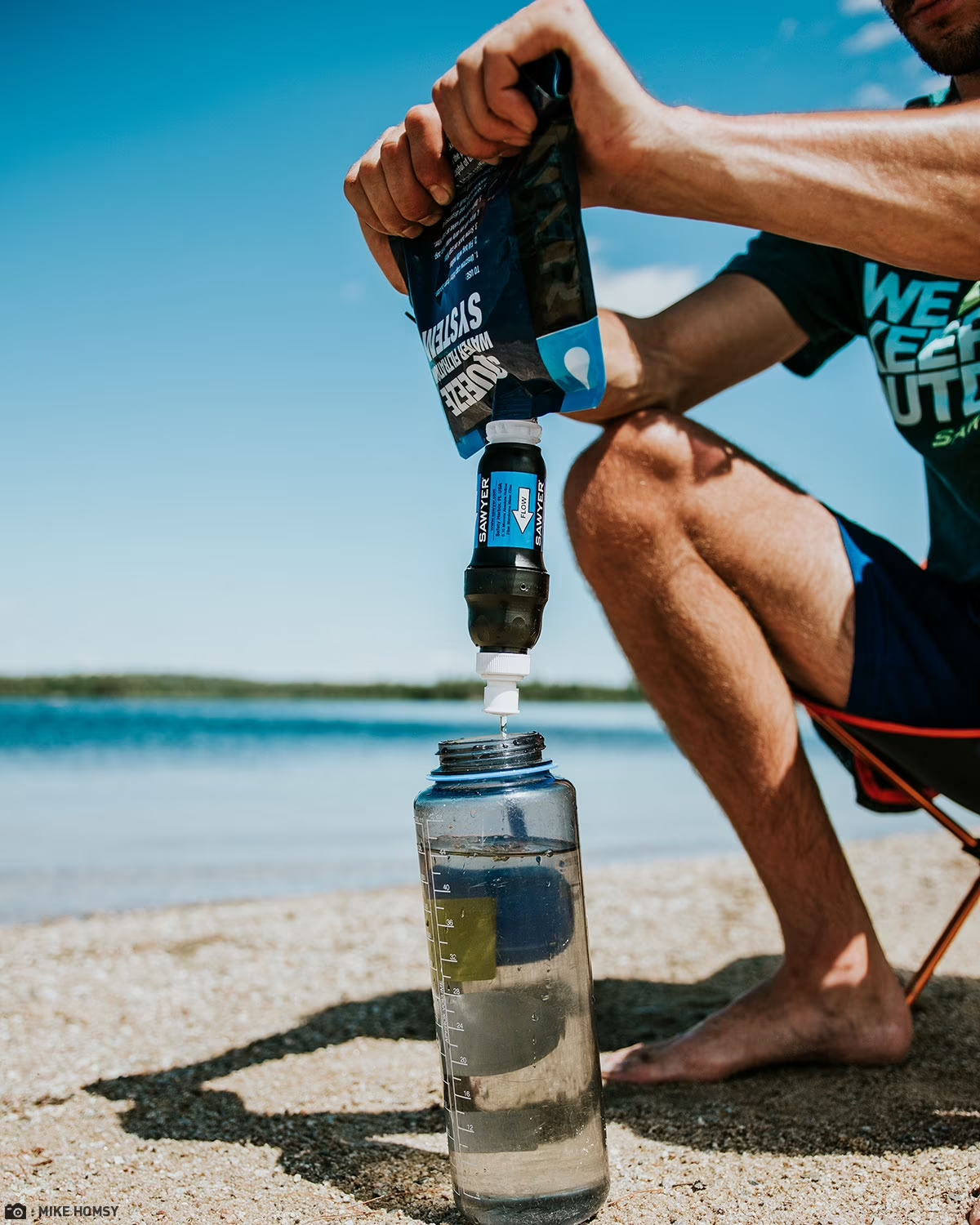
- Invest in a high-quality gravity filter or a LifeStraw for mobile needs.
7. Contaminating During Use
This is the mistake that kills during the recovery phase. You've stored the water perfectly, but then you dip a dirty cup into the barrel or touch the spout with unwashed hands.
If you use a dirty scoop, you just contaminated 55 gallons of life-saving resource.
Action Items:
- Always pour water out of the container into a secondary vessel.
- If you must dip, use a dedicated, sanitized ladle that never touches anything else.
- Keep your storage area clean and free of dust and pests.
Skill Over Gear
A $3,000 whole-house filtration system is useless if you don't know how to change the filters or bypass the pump when the power dies. Skill over gear, every single time. You need to know how to calculate your family's needs, how to identify safe water sources in your neighborhood, and how to use basic chemicals to make that water drinkable.
Practice these skills now. Don't wait for the crisis to read the instructions on the back of the bleach bottle.

Common Questions
How long can I store water before it becomes unsafe?
If stored in food-grade containers, sanitized properly, and kept in a cool, dark place, water can stay safe for years. However, we recommend a 6-to-12-month rotation to ensure container integrity and taste quality.
Can I use swimming pool water for drinking?
No. The chemicals in a pool (chlorine, algaecides, etc.) are highly concentrated and can be toxic if ingested directly. Pool water should only be used for flushing toilets or, in an extreme emergency, filtered and treated with specialized equipment.
Do I need to buy expensive "survival water"?
No. Tap water is fine if you treat it correctly. Your focus should be on the containers and the storage environment, not on buying specialized water.
Take the Next Step
Building a water system is just one piece of the puzzle. At PrepperNet, we focus on helping you build the relationships and skills necessary to thrive in any situation.
Find a local PrepperNet group today and start training with people in your own community. Don't be the person who figures it out when it's too late.
Metadata Summary:
- SEO Title: 7 Deadly Water Storage Mistakes & How to Fix Them | PrepperNet
- Meta Description: Stop making these 7 dangerous emergency water storage mistakes. Learn practical survival skills to keep your family's water supply safe and ready.
- Excerpt: Most people think they are prepared because they have a few flats of bottled water. They are wrong. Discover the 7 fatal flaws in your water plan and how to fix them today.
- Featured Image Alt Text: Father and son organizing water barrels in a garage for emergency preparedness.
- Category Assigned: Preparedness
- Target SEO Keywords: emergency water storage, survival skills, water storage mistakes, food grade water containers, prepper water supply.